
SPL270 History
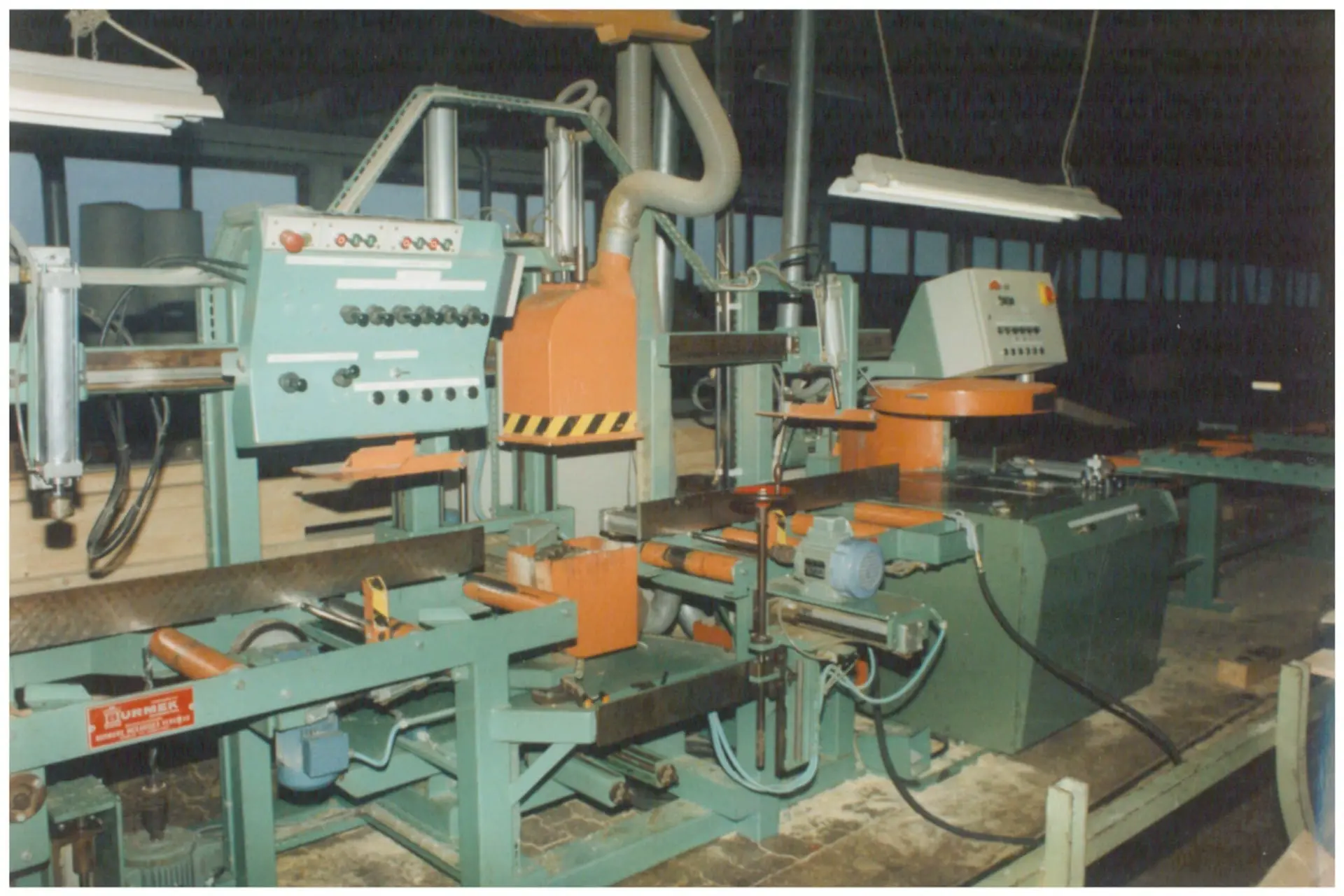
First "Abbund" Machine
The first attempt to build an "Abbund" machine resulted in 1982 in a machine consisting of a saw and a roller conveyor with drop stops. The saw was positioned in angle and centreline, but the longitudinal positioning still had to be done manually by pushing the workpiece against one of the drop stops.
The operator set the stops in advance to suitable positions using a measuring scale. When the material was to be cut, the desired stop was folded down and the material pushed against the stop before the saw cut was triggered. The machine could also be equipped with drilling and milling units.
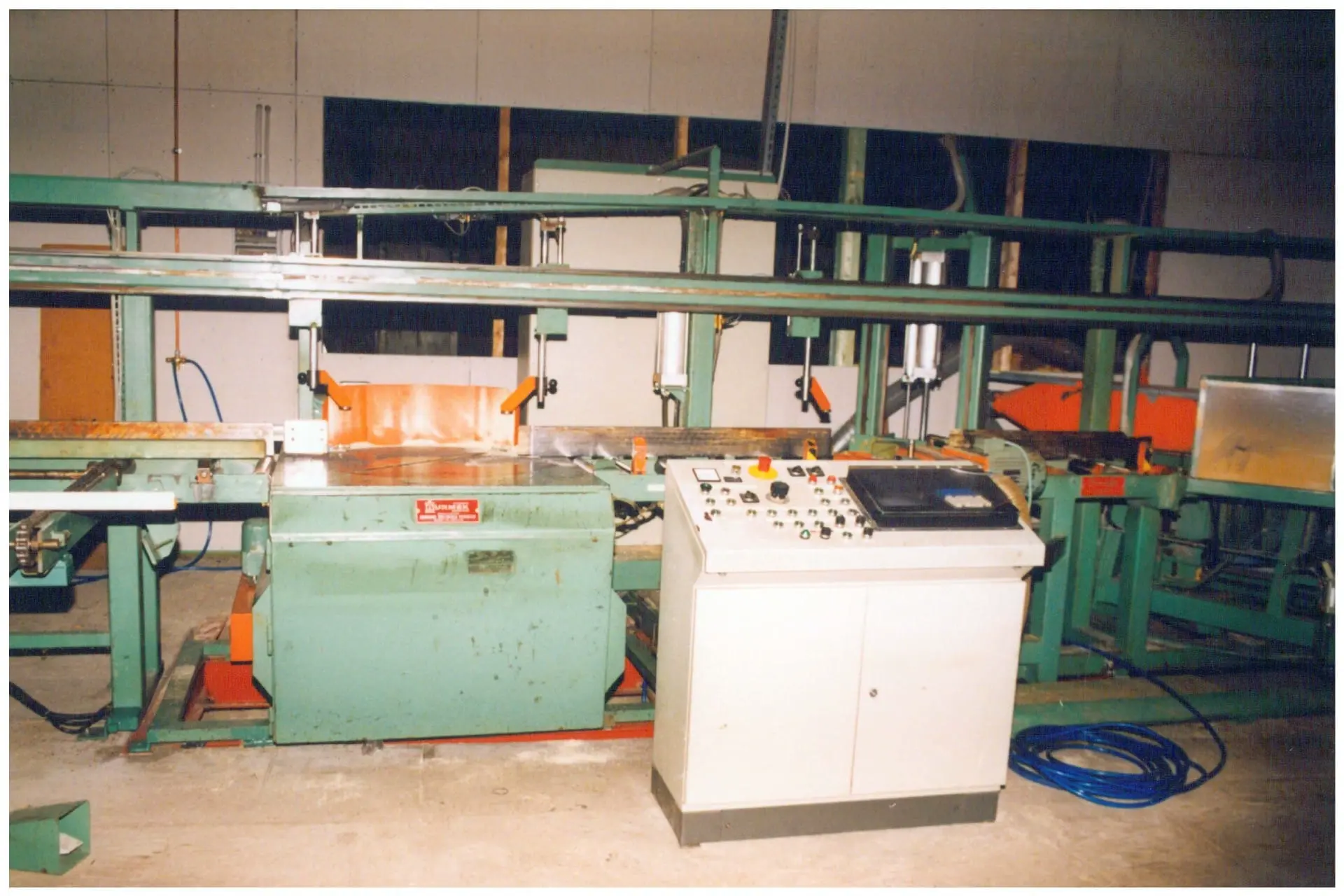
SPL 270-1
The first real "Abbund" machine was presented in 1984. The machine was equipped with a proper control system for automatic positioning of the workpiece. Using a small keyboard and a monitor, the machining operations could be programmed and saved on the machine.
The installation was in its basic configuration equipped with a gripper for positioning the workpiece, a saw that was positioned in angle, centre and inclination, as well as a milling and a drilling unit. Most installations were equipped with additional machining equipment such as notch mills, plate mills, tenon mills, marking units and additional drilling aggregates. Some machines were also built for log house production. The machines were continuously improved and the level of automation successively increased.
SPL 270-2
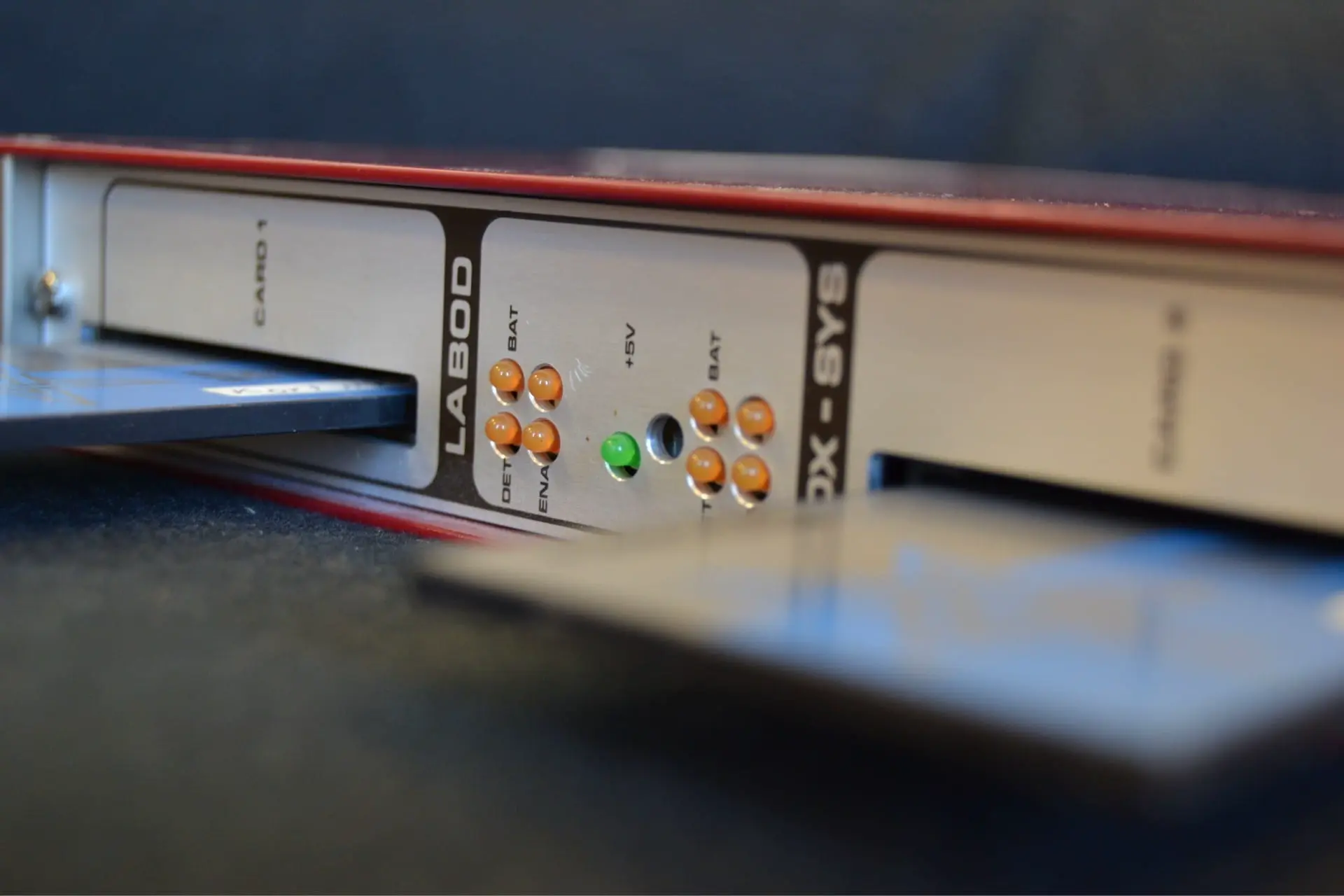
In 1988, a new control system was developed with the ability to handle RAM cards. Burmek developed an office program that could be used to create and save production programs on RAM cards. The RAM cards could then be plugged into the machine where the machining programs could be read in for production.
This also made it possible to generate production programs directly in the CAD system and then read the code directly into the machine. The SPL270-2 machine also received a new positioning system since the company Hundegger had applied for and received a patent on the solution that Burmek had used in the SPL270.1 machine.
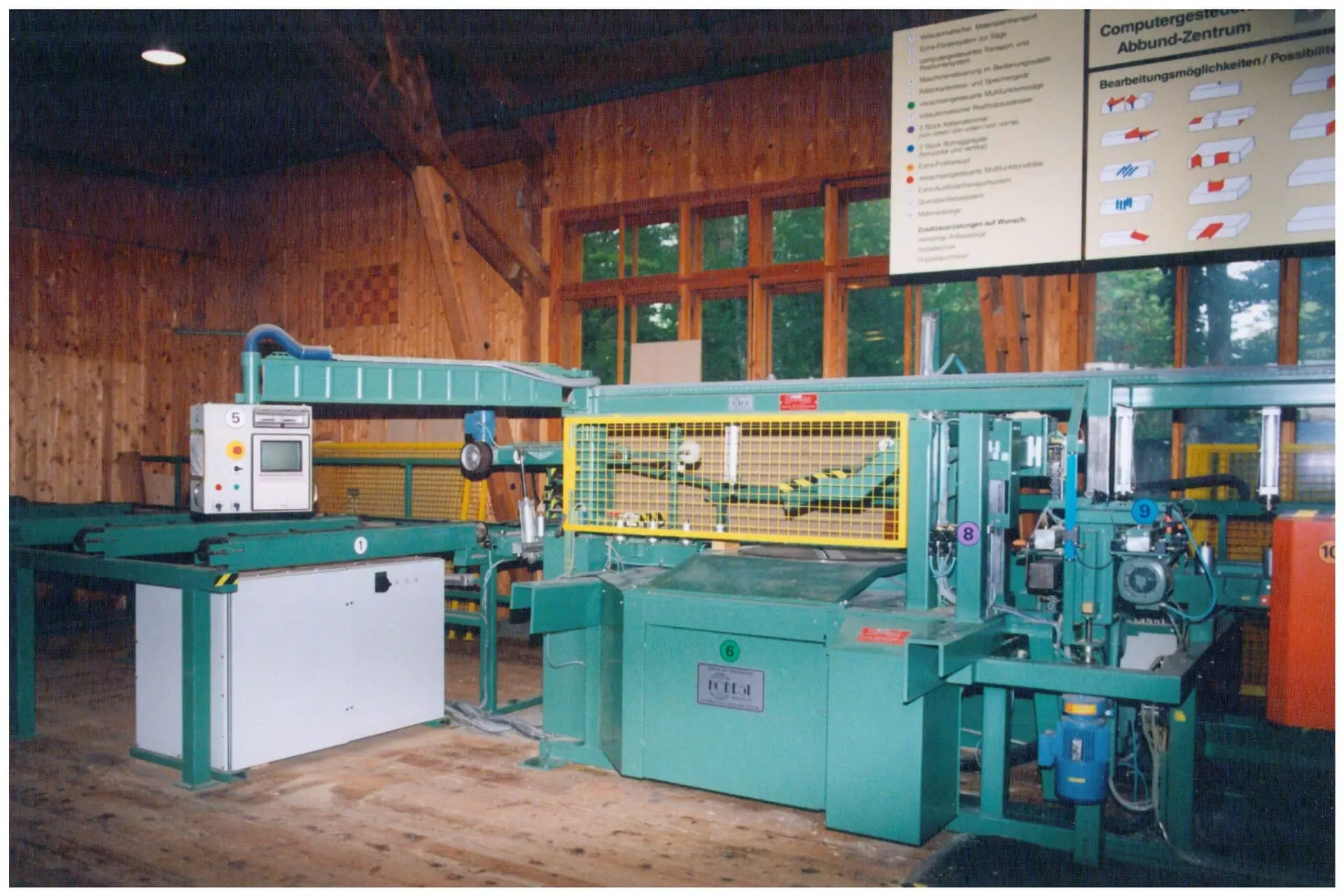
SPL 270-3
SPL 270-2 was replaced in 1989 by SPL 270-3 which had a new positioning system and a traditional saw table.
The machine also received a newly developed milling unit that could be automatically positioned in three dimensions. The level of automation was again increased.
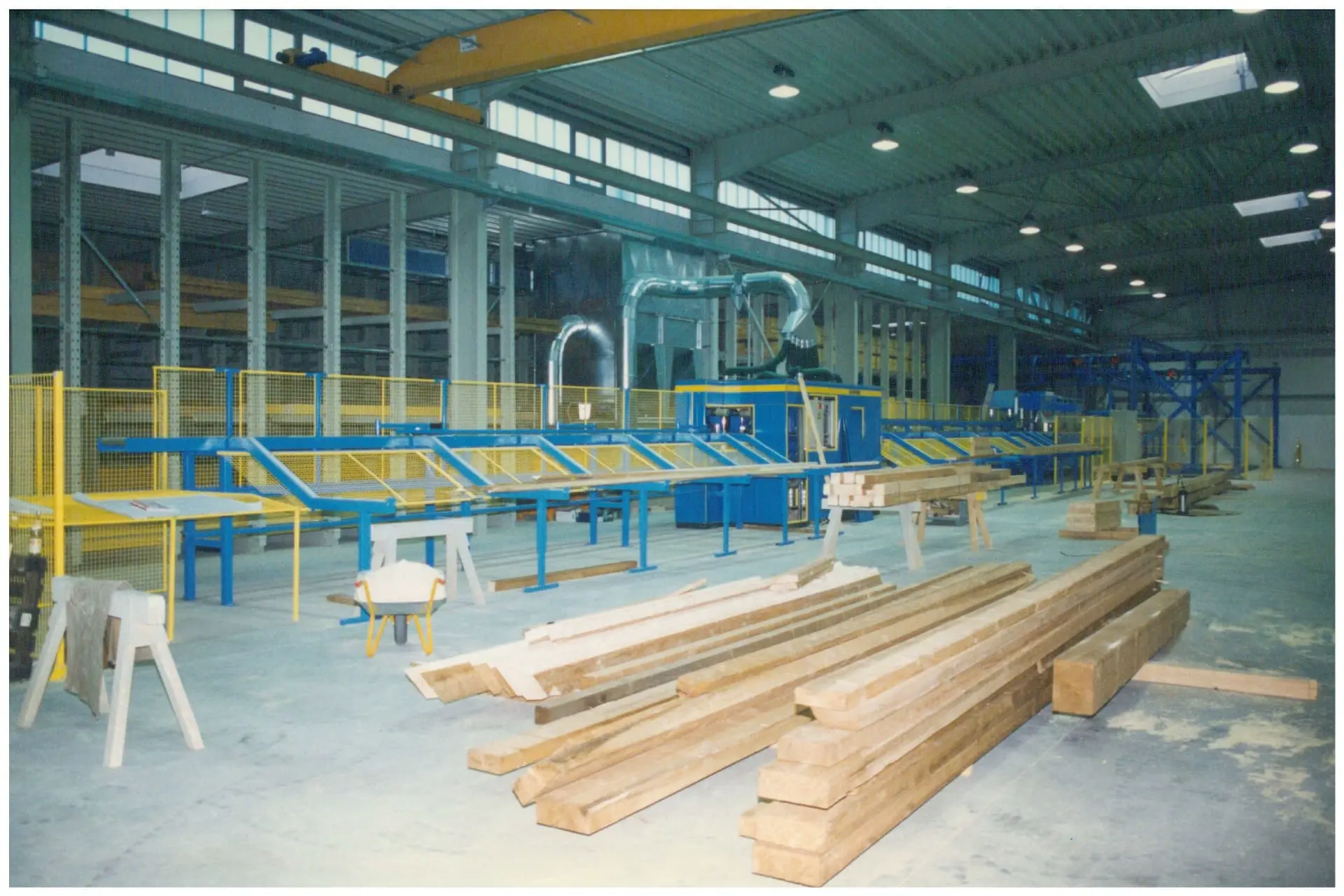
SPL 270-4
In 1994, a new creation saw the light of day. The SPL270-4 received a modern PLC control with the ability to read floppy disks or connect to a network for managing production files. The SPL 270-4 machine could also be ordered with a "pyramid" milling cutter that could mill "Grad" and "Kehlkerven".
The first attempt to build a roof truss machining system resulted in 1982 in a "drop stop" system. The system consisted of a saw that could be positioned in angle and centreline. The longitudinal positioning of workpieces had not yet been implemented. The machine was fitted with several pneumatic stops that were manually positioned on a guide rail using a scale.